
To build topic authority in LLMs, help AI search tools understand what your brand knows and when that information answers a question. The practical goal is to become a useful, verifiable source, not to earn a shared authority score or secure guaranteed citations.
That starts with focused expertise, clear evidence, and accessible pages. Choose a subject your brand knows well, then measure whether its information appears in relevant answers.
How to Build Topic Authority in LLMs, Starting With a Clear Focus
Major AI platforms don't publish one shared topic-authority score. Treat authority as a practical strategy: become a clear, well-supported source on a defined subject.
Choose a Subject Your Brand Can Credibly Own
Start where your experience overlaps with your audience's decisions. Product documentation, support questions, and subject-matter specialists can reveal gaps worth answering.
Map beginner questions alongside comparisons and practical decisions. Keep the scope narrow enough to offer detail that broader sources lack. No particular page count guarantees visibility.
Plan Connected Pages Around Real Questions
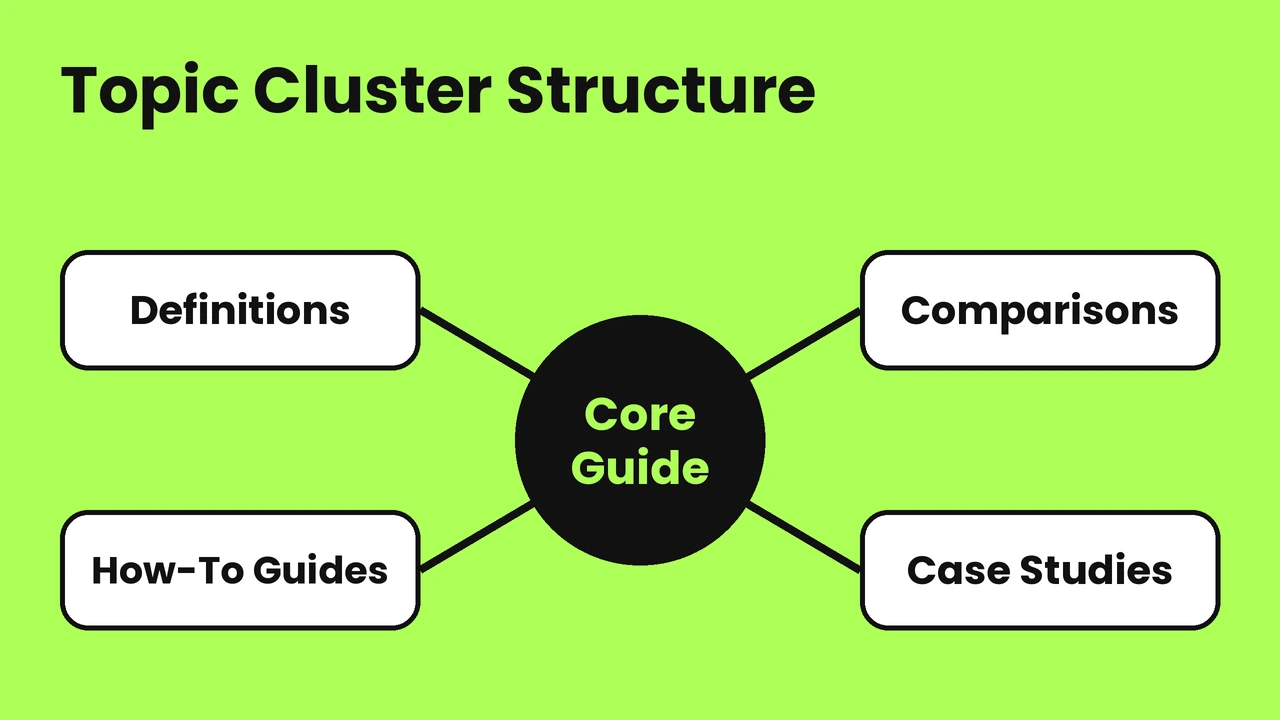
Build a core guide, then connect it to useful definitions, how-to articles, comparisons, and case studies, applying proven semantic SEO principles to map relationships between subtopics.
However, internal links should help readers find the next useful answer. A cluster layout isn't a published formula for AI citations.
Publish Useful Expertise That People and AI Systems Can Verify
Official Google AI features guidance emphasizes helpful, reliable, people-first content. Publishing useful expertise requires comprehensive semantic content writing backed by real domain knowledge, because publishing more pages doesn't replace having something useful to say.
Add Original Detail, Clear Sources, and Accountable Authors
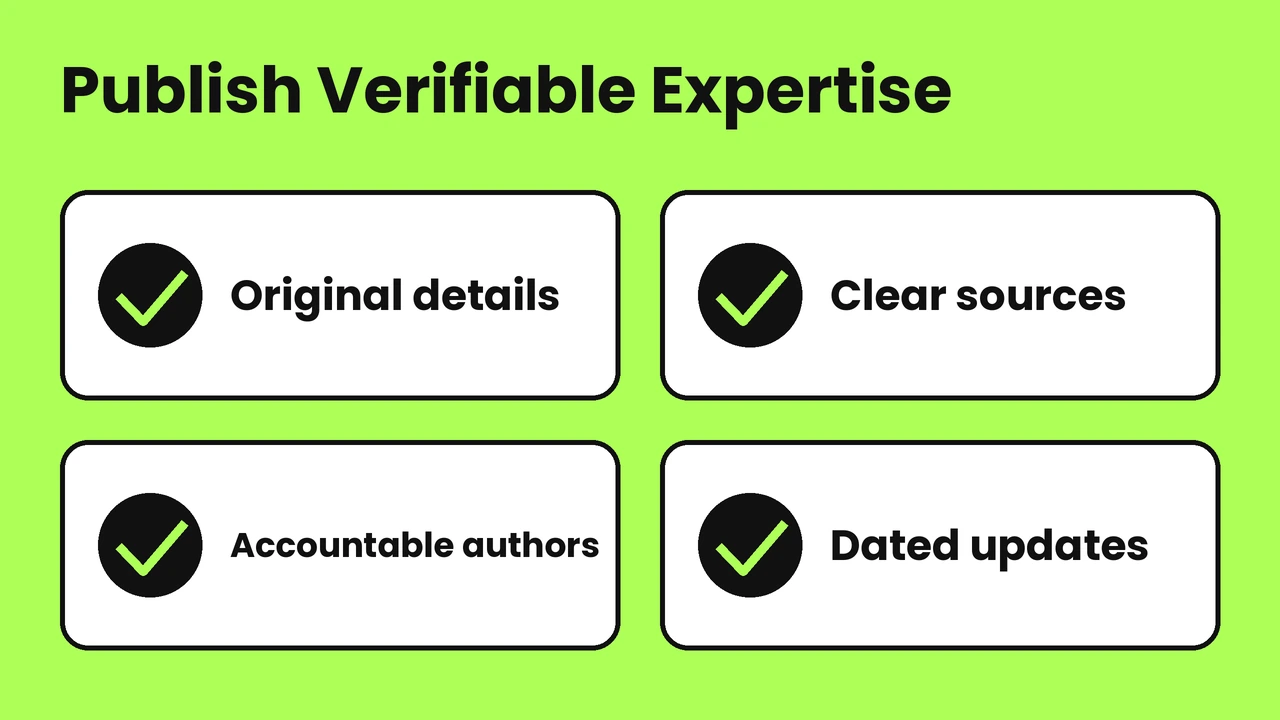
Include firsthand examples, documented methods, and useful data when you have them. Explain how you reached a conclusion so readers can judge its limits.
Name authors with relevant experience and date information that changes. Support important claims with credible sources. Also, use consistent organization and product names, and explain exactly what your company does.
These are sound editorial practices, not guaranteed citation triggers.
Keep Important Answers Visible and Easy to Navigate
Put essential facts in readable page text rather than only in images or downloadable files. Use descriptive headings and contextual links to related explanations.
Structured data should match visible content. Google requires no special schema for AI Overviews or AI Mode, so prioritize accurate information over extra markup.
Make Your Website Accessible and Build Recognition Beyond It
Technical access and outside recognition address different needs. One makes content discoverable; the other gives readers independent evidence about your expertise.
Check Google Indexing and ChatGPT Search Access
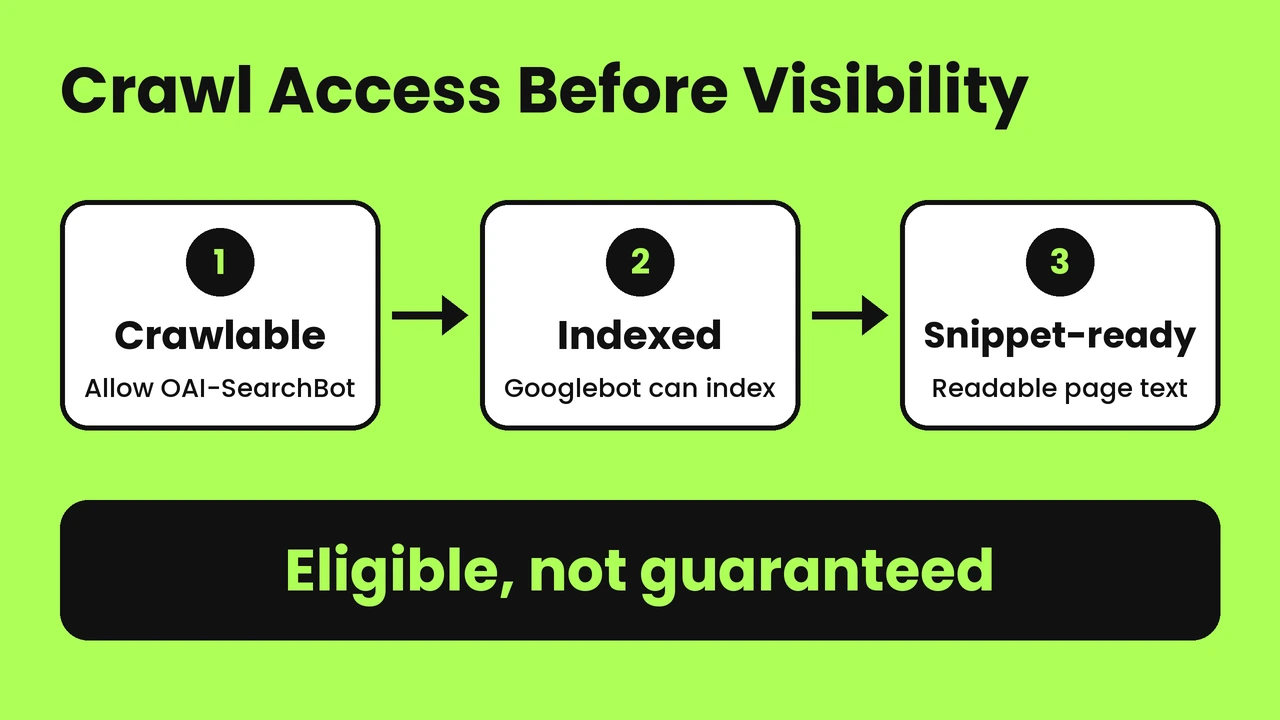
For Google AI features, important pages must be indexed and eligible to appear with a Search snippet. Reviewing your technical SEO audit, internal links, robots.txt rules, and hosting restrictions ensures crawler bots face no roadblocks.
Sites seeking conversational search visibility should allow major web crawlers like OAI-SearchBot and ensure their server handles retrieval requests smoothly.
Neither successful crawling nor indexing guarantees inclusion in an answer.
Earn Independent References That Support Your Expertise
Useful research, expert contributions, and substantive partnerships can earn relevant coverage. Favor references from credible organizations whose audiences overlap with yours.
Consistent, accurate mentions help people verify your brand and its claims. However, available platform guidance specifies no required number or type of mentions for topic authority in LLMs.
Measure AI Search Visibility Without Mistaking a Mention for Success
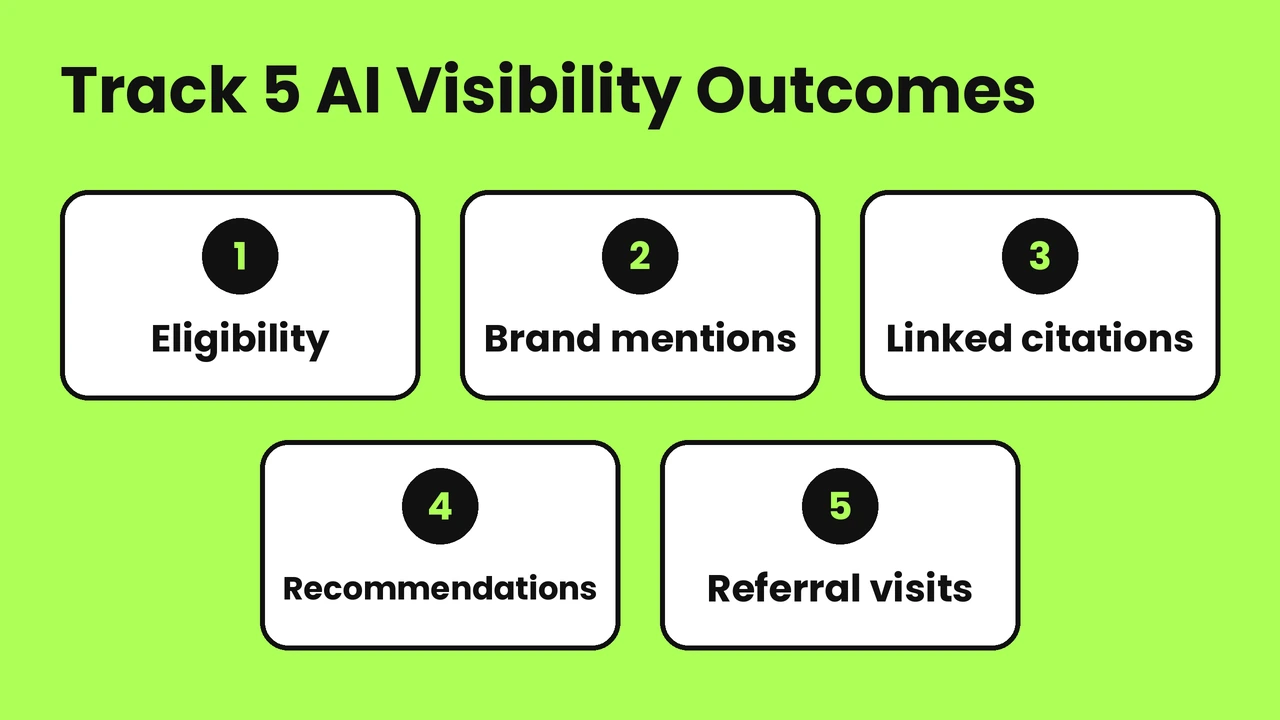
Understanding the framework of GEO vs AEO vs LLMO clarifies why separate metrics are needed for technical eligibility, brand mentions, linked citations, recommendations, and referral visits. Each measures a different outcome.
Use a repeatable set of audience questions. Record the exact prompt, date, platform, answer, source links, and competitors mentioned. Include geography when it changes the question's meaning.
Then repeat those checks over time. Answers can vary, and a single appearance doesn't establish lasting visibility.
Review referral visits alongside answer-level observations. Clicks measure traffic that reaches your website, not every exposure. Likewise, a vendor's visibility score isn't an official cross-platform authority score or a guaranteed citation rate.
Frequently Asked Questions
How long does it take to build topic authority in LLMs?
There's no fixed timeline. Progress depends on your existing content, technical access, subject matter, and how often systems revisit the information. Track changes over time rather than expecting immediate results.
Do I need special schema or AI files to appear in AI answers?
Google says no special schema or AI-specific files are required for its AI features. Use accurate structured data where appropriate, but keep it consistent with visible page content.
Does being cited mean an LLM recommends my business?
No. A citation identifies supporting information, while a recommendation endorses a choice for a particular need. A brand mention may include neither, so record these outcomes separately.
Can I guarantee that an LLM will cite my website?
No platform promises a citation for a specific page or brand. Crawl access and strong content support eligibility and usefulness, but they don't control which sources appear.
Build Expertise Readers Can Check
Lasting visibility starts with useful subject expertise, accessible pages, and evidence readers can evaluate. Treat verifiability as a publishing standard, rather than chasing a tool score.
Choose one focused topic, improve its strongest pages, and measure results repeatedly. One AI answer isn't proof of authority.
Frequently Asked Questions
How long does it take to build topic authority in LLMs?
There's no fixed timeline. Progress depends on your existing content, technical access, subject matter, and how often systems revisit the information. Track changes over time rather than expecting immediate results.
Do I need special schema or AI files to appear in AI answers?
Google says no special schema or AI-specific files are required for its AI features. Use accurate structured data where appropriate, but keep it consistent with visible page content.
Does being cited mean an LLM recommends my business?
No. A citation identifies supporting information, while a recommendation endorses a choice for a particular need. A brand mention may include neither, so record these outcomes separately.
Can I guarantee that an LLM will cite my website?
No platform promises a citation for a specific page or brand. Crawl access and strong content support eligibility and usefulness, but they don't control which sources appear.
Need a Technical SEO Audit or Strategy Call?
Connect directly on WhatsApp to review your site speed, topical architecture, and organic growth roadmap.