
Typing an exact keyword no longer guarantees a useful answer. When people search "what is semantic seo," they usually want a plain definition, a real example, and steps they can use.
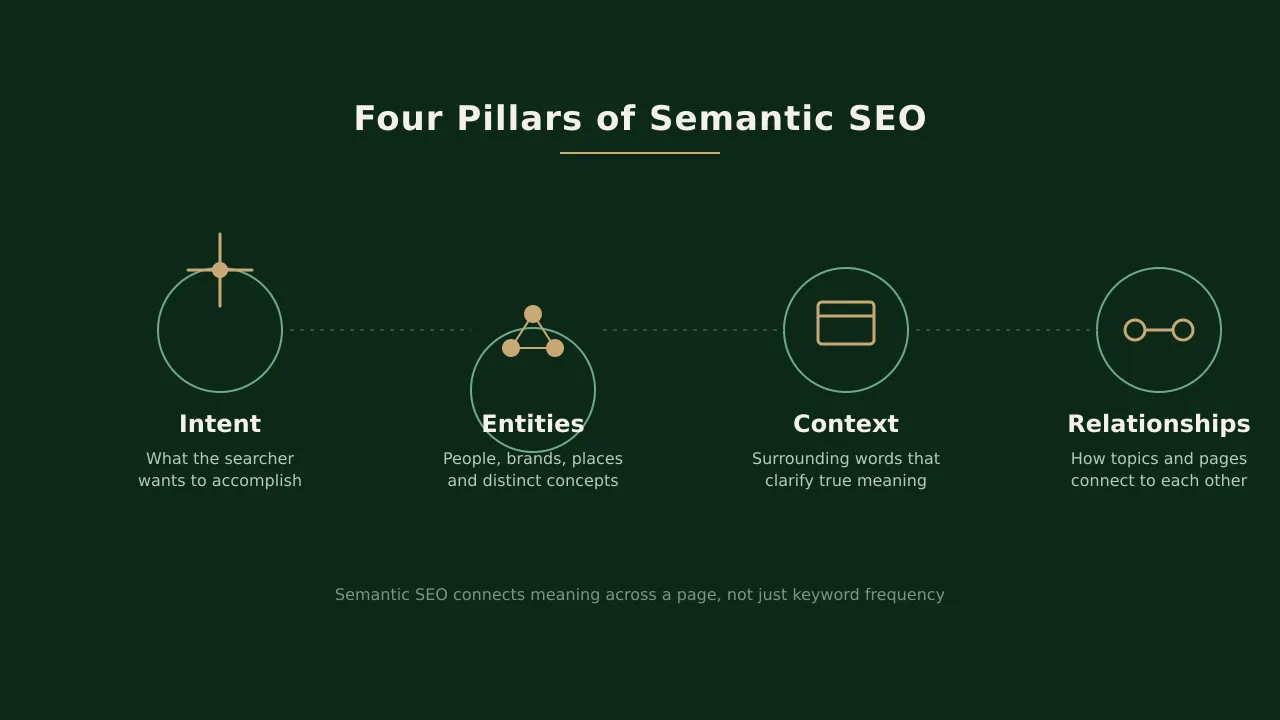
Semantic SEO helps a page match the meaning behind a search. It brings together intent, entities, context, topic clusters, internal links, and structured data.
Key Takeaways
What is semantic seo?
Semantic SEO is the practice of making content clear in meaning and purpose. It helps search engines understand what a page discusses, who it helps, and how its ideas connect.
The answer to "what is semantic seo" starts with three ideas: search intent, entities, and context. A useful page covers the main subject and the related details a reader needs.
Laptop, notebook, and colorful sticky notes sit on a modern desk with one blurred person behind it. Context changes meaning. "Apple pie recipe" points to fruit, while "Apple iPhone repair" points to the technology company. Nearby words make the difference clear for people and search systems. Combining structured content with precise on-page optimization allows search engines to categorize topics effortlessly.
Semantic SEO vs. Traditional Keyword Optimization
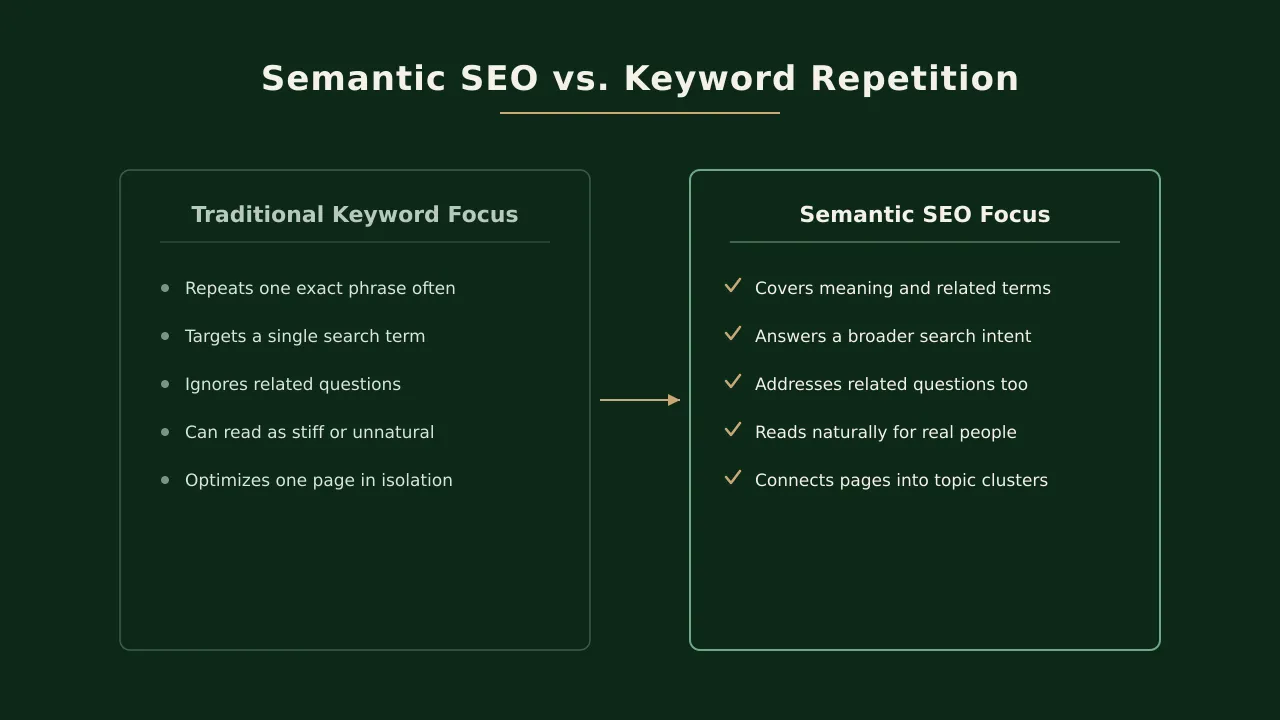
Traditional keyword work often focused on repeating one phrase in titles, headings, and paragraphs. Exact-match terms still help readers confirm they found the right page. However, repetition alone rarely answers a full question.
Semantic SEO covers related questions, features, and terms in natural language. A page about running shoes may discuss fit, surface type, support, sizing, and materials. That broader coverage gives readers useful details without awkward wording. Executing effective semantic content writing ensures every article addresses searcher intent while covering key entities naturally.
How Semantic Search Helps Google Understand a Topic
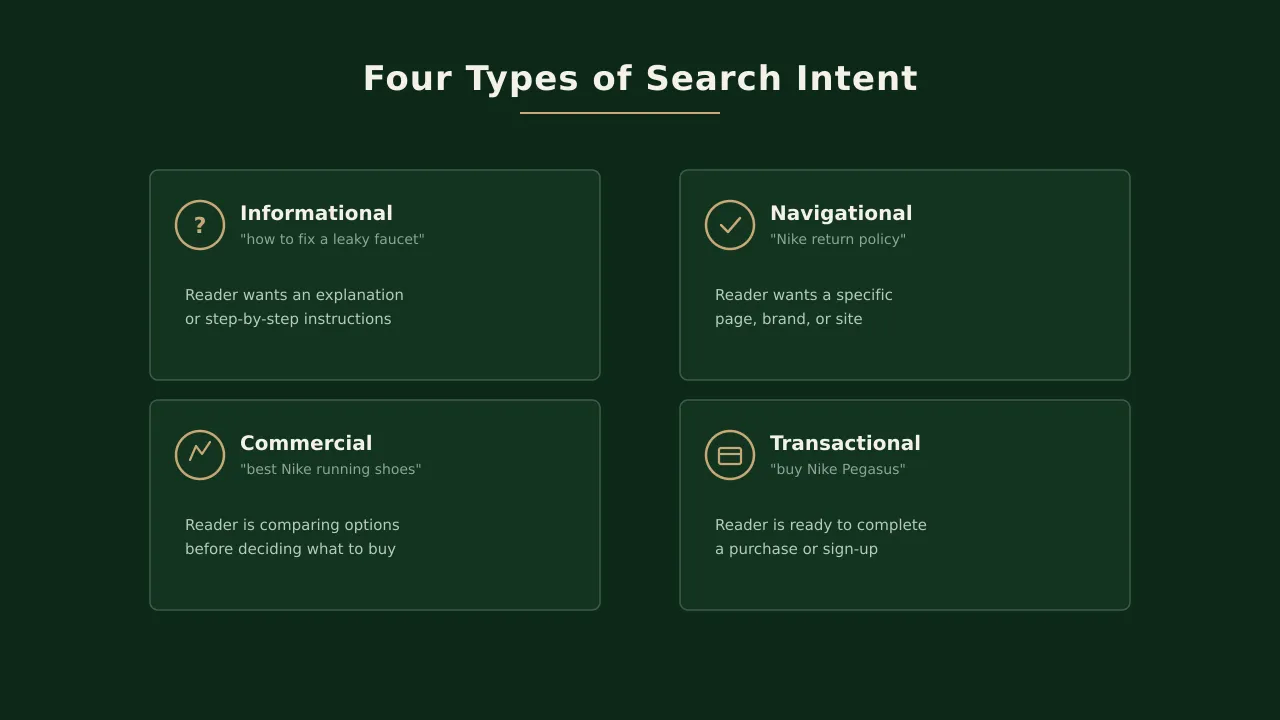
Search systems match a query with likely intent, known entities, and page context. Intent usually falls into four groups: informational, navigational, commercial, and transactional.
For example, "Nike return policy" has a different goal than "best Nike running shoes" or "buy Nike Pegasus." Location and added words can also change the best result. A semantic SEO guide from Search Engine Land explains how topics, context, and entities work together.
Google's Knowledge Graph organizes facts about real-world entities and their connections. Because of those connections, a page may appear for related searches even if it does not repeat every query word.
Entities, Attributes, and Relationships
An entity is a distinct thing, such as a person, brand, product, place, event, or idea. Attributes describe that thing. Relationships explain how it connects to other things.
For a laptop, the brand, screen size, operating system, battery life, and price are attributes. Clear facts help search systems separate one laptop model from another.
Search Intent and Context Shape the Best Answer
Intent should guide a page before you write it. "How to fix a leaky faucet" needs repair steps. "Best faucet for a bathroom" needs comparisons. "Buy a bathroom faucet" needs product choices and purchase details.
Semantic SEO works when the page format fits the goal. Combining all three searches on one unfocused page often confuses readers.
How to Build a Semantic SEO Strategy That Works
Start with one audience question and one main topic. Then build outward with care.
1. Check Google results, related searches, and People Also Ask questions for common needs.
2. List related entities, features, problems, and trustworthy first-party sources.
3. Create a cornerstone page that answers the broad question with clear headings.
4. Publish focused supporting pages for narrower needs and connect them with descriptive internal links.
5. Track clicks, impressions, engagement, conversions, and visibility across the topic.
A semantic SEO planning guide from SE Ranking can help you map intent before expanding a content group. Compare competitor coverage, but fill real reader gaps instead of copying page layouts.
Create Topic Clusters and Strong Internal Links
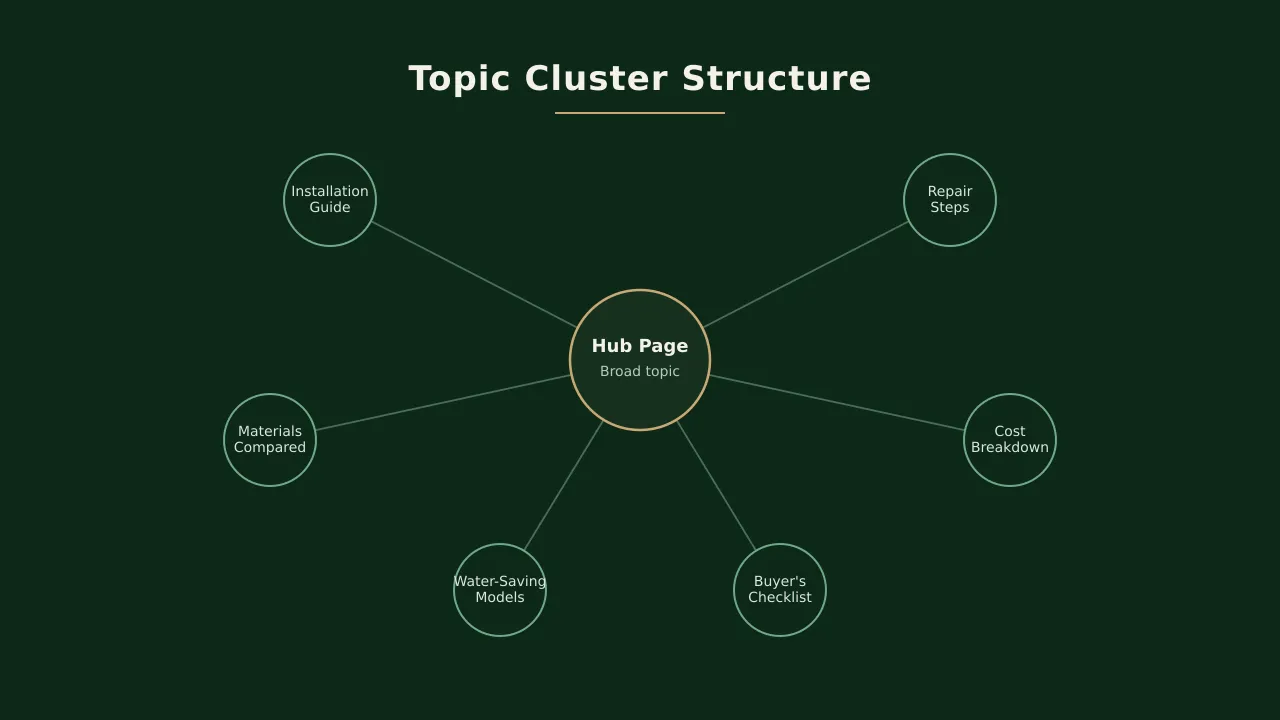
A topic cluster has one broad hub page and several focused support pages. A home plumbing site might link a faucet guide to pages about installation, repair, materials, and water-saving models.
Each link should explain where it goes. "How to repair a dripping faucet" gives readers more help than a vague "learn more" link. Analyzing proven case studies demonstrates how strategic topic clusters increase organic visibility over time.
Use Structured Data Without Overpromising Results
Schema markup gives search engines machine-readable details about pages, products, articles, organizations, reviews, and FAQs. Schema App's overview of semantic SEO explains how structured data can clarify content relationships.
Building a comprehensive technical SEO strategy ensures crawlability and schema validation across all pages. Valid markup may help a page qualify for certain search features. It does not guarantee rankings or rich results. Mark up only facts that appear on the page and remain accurate.
Common Semantic SEO Mistakes to Avoid
Keyword stuffing makes copy hard to read and adds little meaning. Thin pages that target tiny phrase changes can also create a messy site structure.
Avoid unrelated terms, vague openings that hide the answer, and links added only for quantity. Inaccurate schema damages trust. AI-written drafts also need fact checks, firsthand knowledge, and updates.
Semantic SEO does not require longer pages. Clear answers, helpful examples, and sound facts matter more than extra words.
Frequently Asked Questions
Is semantic SEO a Google ranking factor?
Semantic SEO is not a single, separate ranking factor. It is a content approach that helps search systems understand relevance, intent, and relationships.
Does semantic SEO replace keyword research?
Keyword research still matters because it shows how people search. Use it to find real questions, then write content that answers the wider need.
Can a small website use semantic SEO?
Yes. Start with one useful page for a focused audience question. Add related pages only when they provide a clear next answer.
Does schema markup improve rankings?
Schema markup can improve how search systems interpret page details. However, valid markup does not guarantee a ranking increase or a rich result.
Final Thoughts
Semantic SEO makes content easier for readers and search systems to understand. Strong pages match intent, name entities clearly, explain relationships, and cover related details without stuffing keywords.
Start by reviewing one existing page. Find missing subtopics, unclear intent, weak internal links, or claims that need better support. Clear meaning is a better goal than repeating the same phrase.
Need a Technical SEO Audit or Strategy Call?
Connect directly with Ibrahim SEO on WhatsApp to review your site speed, topical structure, and organic growth plan.