
Traditional search results once meant scanning blue links. Now Google AI Overviews, ChatGPT Search, Perplexity, and Microsoft Copilot can summarize a question and cite sources within a generated answer.
Generative engine optimization helps your business show up in those answers. It complements SEO, but success may look like a citation, recommendation, or brand mention instead of a top-ten ranking. Start by understanding how these systems find and use information.
Key Takeaways
What Is Generative Engine Optimization?
Generative engine optimization, often shortened to GEO, is the practice of making your content, business information, and technical signals easier for AI systems to find, understand, and use. The goal is visibility in generated answers from Google AI Overviews, ChatGPT Search, Perplexity, Gemini, Claude, and Microsoft Copilot.
A helpful result might be a linked citation, a brand mention, or a direct recommendation. Google describes AI Overviews as AI-generated snapshots with links to explore further, which shows why source visibility matters even when a searcher does not visit a traditional results page.
GEO is still an emerging industry term. There is no single academic definition that every platform or marketer follows.
GEO and SEO Support Different Search Experiences
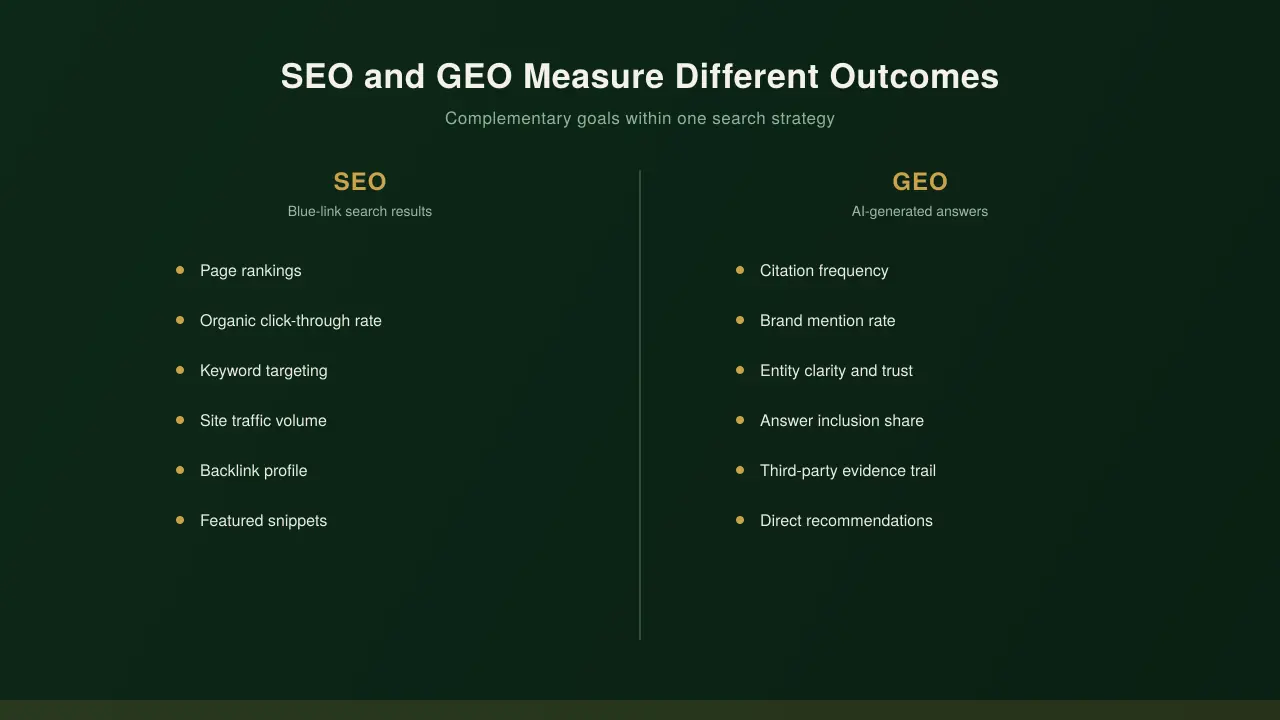
SEO usually targets rankings, impressions, clicks, and organic traffic from blue-link results. GEO targets inclusion within a synthesized response that combines material from several sources.
Still, generative engine optimization does not replace SEO. AI systems need crawlable, well-structured, trustworthy pages to retrieve and assess. A person may get an answer without clicking, so brand visibility and assisted conversions deserve attention alongside traffic.
Why the Terminology Can Vary
Some marketers use GEO and answer engine optimization interchangeably. Others use answer engine optimization more broadly, including featured snippets and voice assistants.
The practical work remains similar: publish reliable material that answers a real question, makes your expertise clear, and gives systems details they can verify.
How AI Search Engines Choose Sources to Cite
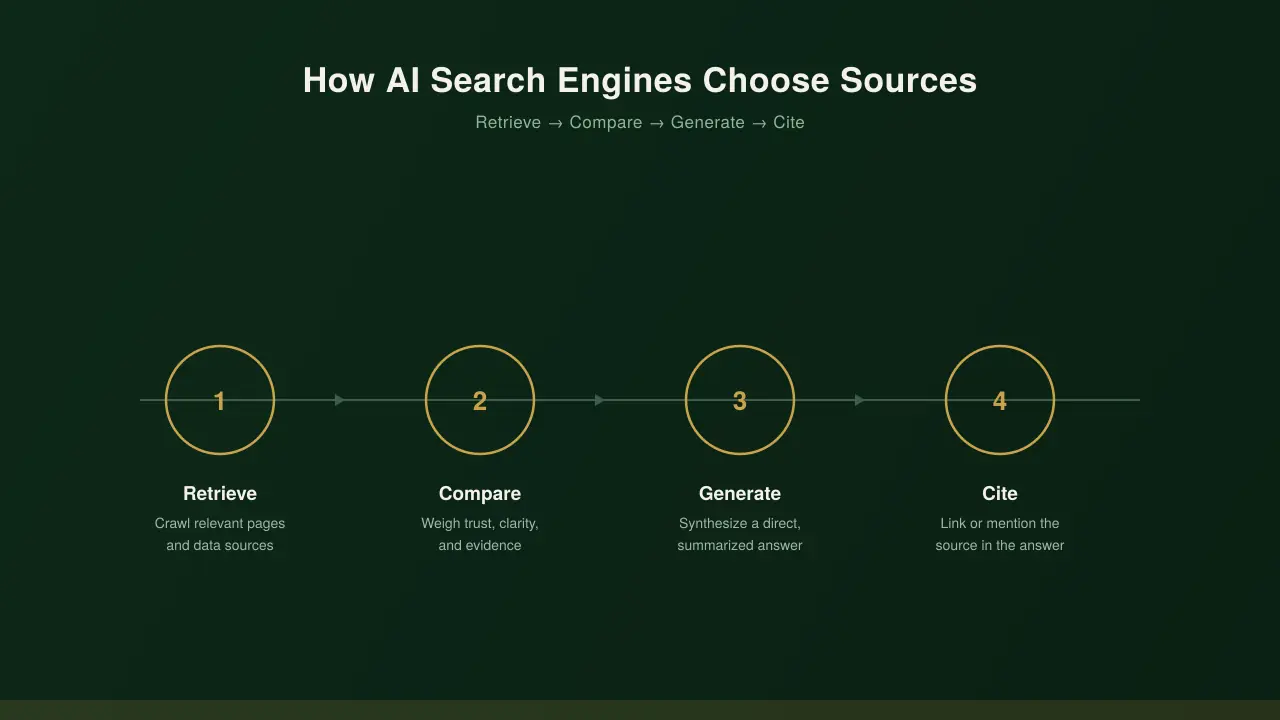
AI search systems do not all work alike. However, many follow a similar broad pattern: retrieve relevant material, compare possible sources, generate an answer, and show inline citations or source links.
Potential sources include brand websites, product documentation, publishers, government pages, educational institutions, review platforms, Reddit, Quora, YouTube, and community discussions. The selected sources can change with the query, topic, location, and available evidence.
For health, finance, and regulatory questions, official and authoritative sources often carry more weight. Perplexity, for example, labels some sources as Government, Academic, or Trusted.
What Makes a Page Easy to Understand and Quote?
Use descriptive titles, clear headings, and direct answers near the top of the page. Short factual statements help, especially when they sit beside useful context, product specifications, pricing details, FAQs, or comparison information.
Original research and first-hand experience can also set a page apart. Make the connection between your company, product, author, and subject explicit. AI systems can work with clear entities and verifiable claims more easily than vague marketing language, principles detailed further in our semantic SEO guide.
Citation Relationships Are Getting More Attention
Google's Highly Cited badge announcement is one sign that citation relationships matter in search. The badge identifies influential coverage and can indicate when an article references a Highly Cited source.
It is not an AI Overview citation. Yet it reinforces a useful GEO principle: publish material that other credible sources have reason to reference.
How to Improve Your Generative Engine Optimization Strategy
Begin with technical SEO. Important pages must load reliably, remain crawlable, and present accurate business details. Then review the questions customers ask before buying, comparing options, or needing support.
Build useful pages around those needs through strategic semantic content writing, original data, product documentation, and transparent comparison content. Third-party visibility also matters because answer engines can cite sources beyond your own site.
Digital PR, legitimate reviews, comparison platforms, and relevant community conversations can strengthen a brand's evidence trail. Useful AI search citation guidance offers a practical view of why strong rankings alone may not produce citations.
Schema markup can help machines interpret information, but it cannot guarantee a citation or recommendation.
Measure Visibility Without Expecting Perfect Rankings
GEO measurement is still developing. Monitor citation frequency, brand mention rate, answer inclusion for target prompts, share of voice, referring visits, branded search growth, direct traffic, leads, and conversions.
Test the same questions across platforms, dates, locations, and logged-in states. Answers can change quickly. Citation presence also does not always create a click, which makes attribution less precise than traditional organic search reporting.
Avoid Common GEO Mistakes
Avoid treating GEO as a race to rank only in ChatGPT, though proven execution—such as our AstrologerBotAI case study—proves how targeted authority signals improve inclusion across conversational models. It is also not a schema-only project or a replacement for SEO.
Do not publish thin AI-written pages, stuff keywords, or make claims you cannot support. Broad brand reputation, source quality, and accurate information across the web matter more than trying to force one platform to cite you.
Frequently Asked Questions
Is generative engine optimization the same as answer engine optimization?
The terms overlap and are often used interchangeably. Both describe efforts to improve visibility in direct or AI-generated answers. Usage varies, so focus on the shared work instead of a rigid label.
Can small businesses benefit from GEO?
Small businesses can compete with specific, trustworthy answers and accurate local information. Legitimate reviews and mentions in respected local or industry sources can also help. Results depend on the topic and source quality, not company size alone.
How long does GEO take to work?
There is no standard timeline. Crawling, topic competition, existing authority, content quality, and platform changes all affect results. Establish a baseline, improve steadily, and review citations and mentions over weeks and months.
Do I need special GEO software?
Specialized tools can make prompt, citation, and mention tracking easier. However, you can begin with a spreadsheet, repeatable customer questions, analytics data, and regular checks across major AI search platforms.
Build Sources AI Systems Can Trust
Generative engine optimization helps AI search systems understand your brand well enough to cite or recommend it in synthesized answers. The strongest approach combines human-first content, technical accessibility, clear entity signals, credible third-party mentions, and traditional SEO.
Choose a small set of important customer questions, check how AI platforms answer them today, and improve the sources those answers should rely on.
Need a Technical SEO Audit or Strategy Call?
Connect directly with Ibrahim SEO on WhatsApp to review your site speed, topical structure, and organic growth plan.