
SERP Insight link insertion changes how link building actually works. Instead of guessing which sites might help your rankings, this method looks at pages that already rank on Google and places a backlink where it fits naturally. This guide covers everything from link insertion basics to guest post strategy, off-page SEO planning, and long-term topical authority building. Whether you buy link insertions, run guest posting campaigns, or mix both, you will find a clear, no-fluff roadmap here. Every section below breaks down real steps, not theory, so you can build a backlink strategy that holds up over time.
What Is SERP Insight Link Insertion?
SERP Insight link insertion is a method where you add a backlink to an already-published, ranking page instead of writing new content. Think of it as a smarter niche edit. Rather than picking any aged domain with decent stats, you pick pages proven to rank, then place a curated link inside the existing text. This is different from a random link insertion service that sells links on any old blog post.
So, how does link insertion work in this model? You find an established website with real search visibility, check the page's history, then request a contextual link insertion inside relevant, existing content. The result is a contextual backlink that reads like it always belonged there.
Custom curated link insertion services focus on quality over volume. Every in-content link goes into content that already earns traffic, not a random article insertion buried on page five of Google. This is what is link insertion in SEO terms boiled down: adding an editorial link to aged content that already has trust, rather than building trust from zero with a brand-new post.
The "SERP Insight" Step Explained
This step starts with SERP analysis. You search the target keyword and study which pages hold top spots. From there, you check SERP position, keyword ranking history, and search visibility trends for each candidate page. Keyword difficulty and Google's ranking factors also matter here, since a page ranking for a hard keyword usually carries more weight than one ranking for an easy, low-competition term. This research decides which page earns your link.
The Link Insertion Step Explained
Once you pick the page, the next move is contextual link insertion. This means the in-content link sits inside a paragraph that already covers a related idea. The existing content link should read naturally, using a dofollow link and clean HTML link tag, so search engines treat it as a genuine editorial link. Good content integration matters more than the hyperlink itself. If the sentence around it feels forced, the placement fails, no matter how strong the page's metrics look.
Is SERP Insight Link Insertion Different From a Regular Niche Edit?
Yes, and the difference is real. A regular niche edit often targets any page with an okay Domain Rating, regardless of whether it ranks for anything useful. SERP Insight link insertion only targets niche edit links placed on pages already ranking for your target keyword. So while all niche edits fall under link insertion, not all niche edits are SERP Insight link insertion. If you are comparing link insertion vs guest posting, know this: a niche edit uses old content, while a guest post creates new content from scratch.
What Is a SERP Insight Guest Post?
A SERP Insight guest post is not just another guest posting pitch sent to random blogs. It is content built to match what already ranks on page one. Guest posts written this way earn placement on quality publisher websites because they follow real editorial guidelines instead of reading like a sponsored post stuffed with links. A strong content publisher wants writing that helps its readers, and their editorial team checks for that before approving anything.
This approach differs from a guest blogging alternative that only cares about link count. Instead, every guest post here starts with research on what the top-ranking pages already cover, then builds something sharper. That's the whole point of guest posting done right: earn the placement because the content deserves it, not because a fee changed hands.
The "SERP-Fit" Principle
SERP-fit means your draft matches search intent and topical relevance before you ever pitch a site. Start with content gap analysis and SERP analysis together. Look at what ranks, then find what's missing. Content relevance and editorial relevance decide whether a publisher says yes. Contextual relevance also matters at the sentence level, not just the article level, since editors reject drafts that feel bolted onto a random topic just to fit a link.
Guest Post vs. Link Insertion: Control vs. Speed
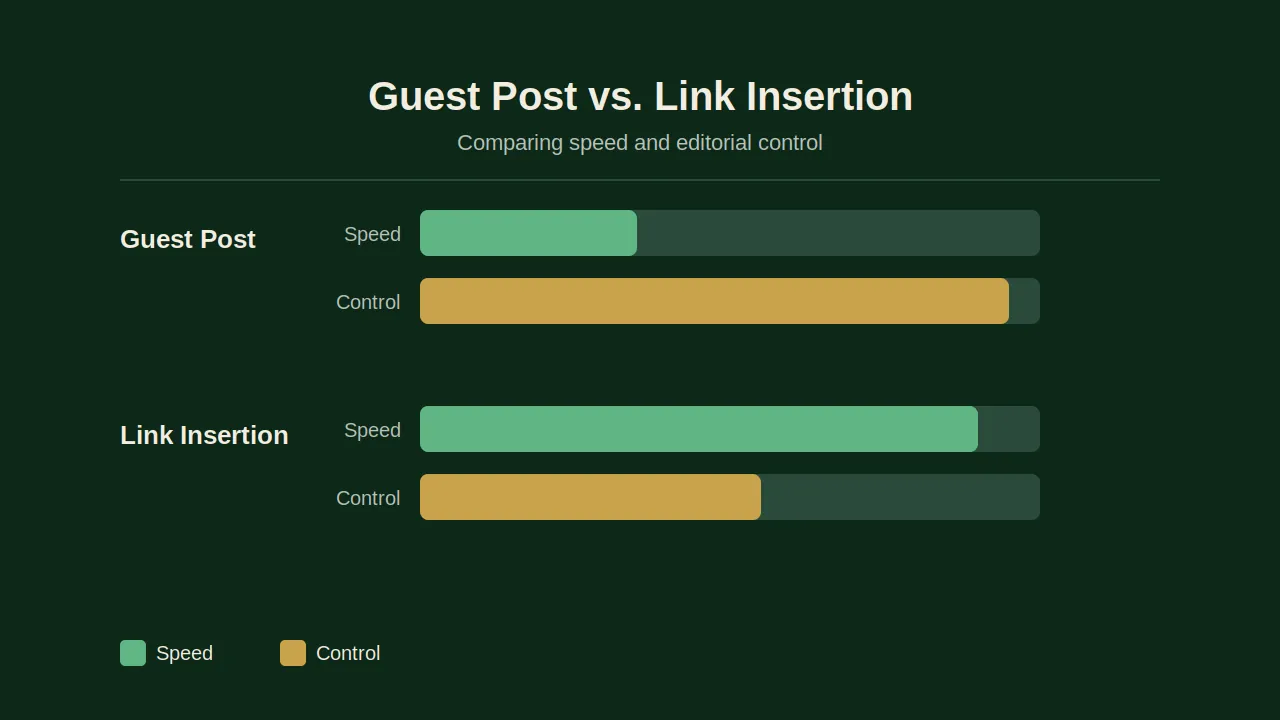
Guest posts give you full editorial control over placement, since you write the piece and decide where the link sits. Link insertion wins on turnaround time and delivery speed, since the page already exists. If you're weighing link insertion vs guest posting: what's the difference in outcome, think of guest posts as slower but more customizable, and link insertion as a faster, quick win compared to the sustainable growth guest posts build over time.
SERP Insight Link Insertion vs. Guest Post vs. Traditional Link Building
Every link building strategy fits somewhere on a spectrum between speed and control. A link building campaign built only on old-school tactics often ignores page-level data completely. SERP Insight flips that by treating off-page SEO as a data-first exercise, not a numbers game.
How Traditional Link Building Usually Works
Traditional link building leans heavily on link prospecting, manual outreach, and cold outreach emails sent through blogger outreach lists. Many teams still rely on a backlink marketplace for straight link buying, working with any link vendor who replies fastest. Some use tiered link building, stacking tier 1 links on top of weaker ones. Others chase a private blog network (PBN) or expired domain links for a quick boost. A webmaster or website owner might offer a one-way link, a reciprocal link, or even a straight link exchange. Most of these tactics skip page-level checks entirely.
How SERP Insight Changes the Strategy
SERP Insight starts with SERP-based keyword research instead of a domain list. You check page authority first, then confirm the page pulls organic traffic right now. Every pick must be a real traffic website, not a hollow, genuine-looking shell built only for selling links. This single shift changes the whole quality bar for outreach.
SERP Insight Link Insertion vs. Guest Post vs. HARO
HARO link building and digital PR work well as a supplement, not a replacement, since journalist responses depend on timing you can't control.
When to Use Each Strategy
Use SERP Insight link insertion for boosting commercial page rankings fast. Use guest posts for improving informational page rankings and strengthening topical authority over months. Agencies scaling link building for agencies often run both, while also improving branded search visibility. Link insertion also works well for replacing an outdated cornerstone asset's links, reclaiming unlinked brand mentions through unlinked mention reclamation, or recovering rankings after an algorithm update once you understand the algorithm update impact on your site.
Why SERP Insight Link Insertion Outperforms Traditional Niche Edits
Not all niche edits deliver the same value. Most traditional niche edits chase Domain Rating and Domain Authority without checking if the page itself brings any real value. SERP Insight link insertion checks page authority and contextual relevance first, since a page ranking on page one carries more trust signals than a strong domain with a dead, unranked article.
Why Ranking Pages Are Better Link Opportunities
A page with real organic search visibility already proves it deserves its SERP position for a given keyword ranking. Linking from that kind of page passes stronger link equity than linking from a domain's ignored, unranked pages. Google trusts pages that already earn clicks more than pages sitting untouched for years.
Why Page-Level Metrics Matter More Than Domain Rating
Domain-wide numbers hide a lot. A site can hold a high Domain Rating (DR) or Domain Authority (DA) while its individual pages sit buried and dead. Check page authority, host page authority, and host page traffic instead. Look at Trust Flow and citation flow for trust signals, plus spam score to catch risky pages early. Tools such as Ahrefs, SEMrush, Moz, and Majestic help pull these page-level SEO metrics before you commit to any placement.
Why SERP Insight Link Insertion Is Faster Than New Guest Posts
Turnaround time drops sharply with link insertion. There's no drafting, no editing cycle, no waiting on a publisher's content calendar. Delivery speed improves because the existing content link goes straight into aged content that's already live and indexed, cutting weeks off your timeline compared to writing and pitching a brand-new guest post.
How SERP Insight Link Insertion Works: A 5-Stage Process
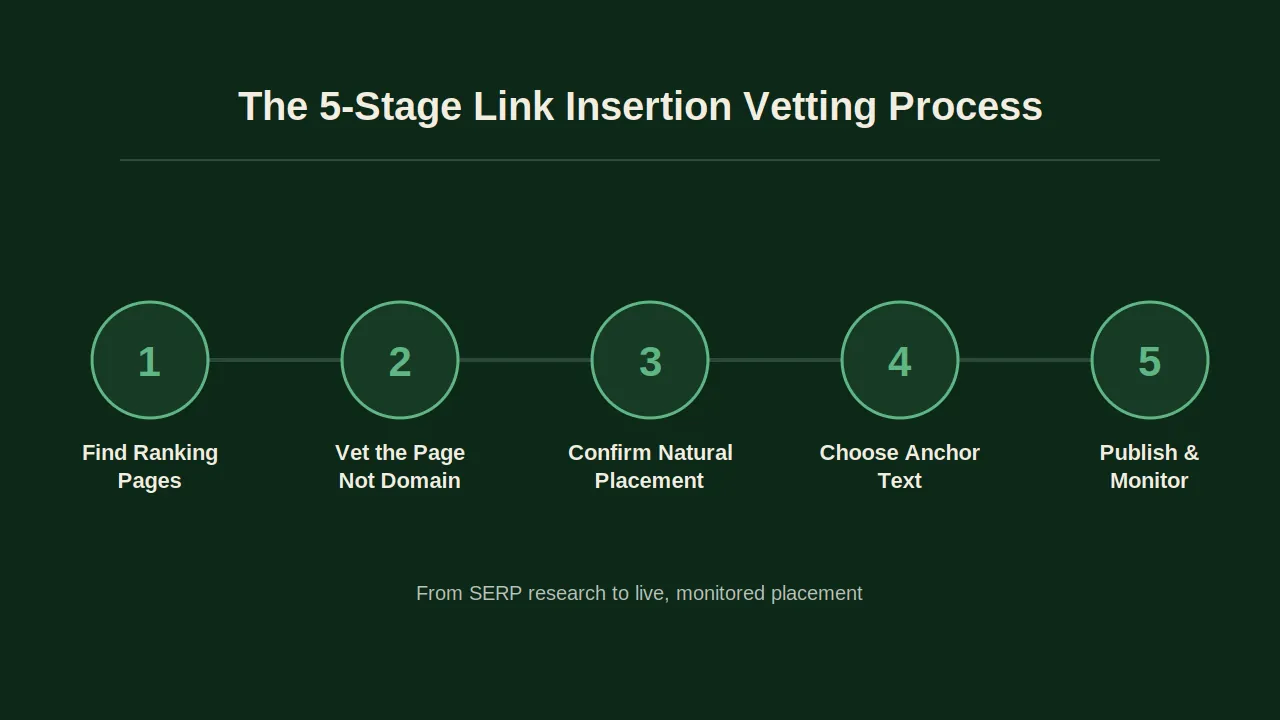
This five-stage vetting process turns link building tactics into a repeatable system instead of guesswork. Each stage builds on the last, so skipping one weakens the whole placement.
Stage 1 — Find Pages Already Ranking for Your Target Keyword
Start with SERP-based keyword research to spot pages ranking on page one or two for your target term. Prospecting link opportunities here means checking competitor backlink analysis and reverse-engineering competitor backlinks to see where strong pages already earn links. Link building tools speed up this search, letting you sort dozens of ranking pages by relevance in minutes instead of hours.
Stage 2 — Vet the Page, Not Just the Domain
Vetting publishers means running every candidate through an opportunity assessment checklist before reaching out. Use a self-scoring vetting checklist to grade each referring page, its host domain, and root domain. Check active audience engagement and publisher reputation too, since a page with no readers rarely moves rankings.
Stage 3 — Confirm a Natural Placement Exists
Before you commit, confirm editorial relevance exists in the text. The link needs editorial justification, meaning it should clarify or enhance existing content, not just sit there for SEO value.
Stage 4 — Choose Anchor Text That Reads Naturally
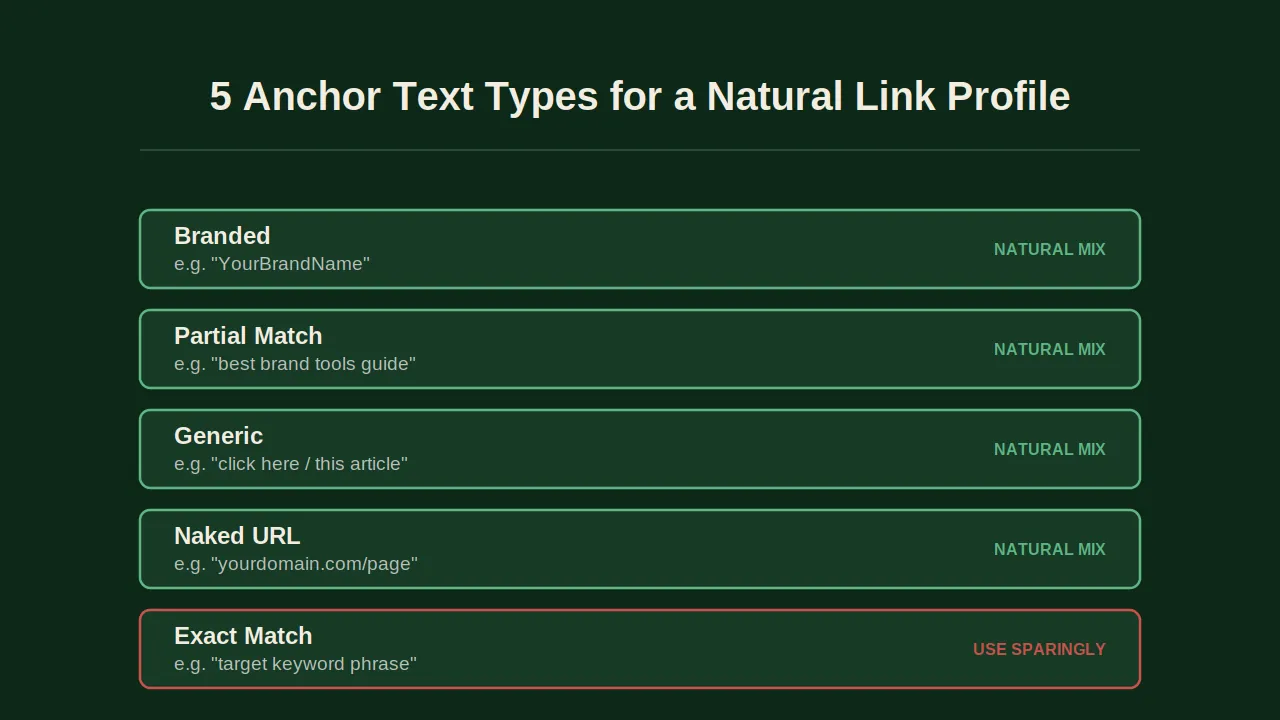
Anchor text choice affects both readability and safety. Keep anchor text diversity healthy and watch your anchor text ratio across your whole backlink profile.
Stage 5 — Place, Publish, and Monitor the Link
Once approved, the goal is permanent link placement, not a link that vanishes in a month. Confirm you're getting a live link with a link placement guarantee in writing. After publishing, set up link monitoring to confirm the indexed page stays in the Google index. Watch for any content update on the host page later, and always ask about a do-follow guarantee before paying.
How to Plan a SERP Insight Guest Post
Planning starts before you write a single word. Run a content gap analysis first, then map search intent for your target keyword. This groundwork decides whether your guest post earns rankings or just sits quietly on someone else's blog.
Step 1 — Map the Search Intent
Study the search intent behind your target keyword. Check the People Also Ask box and any featured snippets already showing on the SERP. These sections reveal exactly what readers expect, so your pitch and draft can match that expectation from the first paragraph.
Step 2 — Build a Gap Map (What's Missing on Page One)
Run a content gap analysis across the top-ranking pages. Look for topical authority gaps, then build your outline around filling topical authority gaps competitors ignored. This step turns your guest post into something genuinely more useful than what already ranks.
Step 3 — Score for Editorial Fit
Check the target site's editorial standards before pitching. Strong publisher relationships grow from following editorial guidelines closely, every single time. This approach also builds relationship-based link building, so future pitches get easier and faster to approve.
Types of Guest Post Content That Rank in 2026
Guest posts that rank in 2026 share a few common traits. They lean on evergreen content instead of trend pieces that expire in weeks. Editors trust drafts that build cornerstone content trust, meaning the piece could anchor a content marketing strategy on its own. Strong E-E-A-T signals matter too, so include real experience, not just recycled facts. Entity SEO and semantic SEO also play a bigger role now, since Google connects topics through entities, not just exact keywords. The best-performing guest posts support topical authority building by covering a subject fully, addressing related questions readers actually ask, and connecting ideas the way a genuine expert would. Thin, generic pieces rarely earn placement anymore, and even when they do, they rarely move rankings for the host site or your own link.
Writing a SERP Insight Guest Post That Ranks
Writing quality now decides more than backlink count ever did. Content quality and E-E-A-T signals need to show up in every paragraph, reinforced by expert semantic content writing. Topical relevance matters at the sentence level, not just the headline.
Structure Patterns to Model (Not Plagiarize)
Study how top-ranking pages organize their content silo and internal link structure, then build your own version. Match their semantic relevance without copying sentences or ideas directly.
Evidence, Examples, and Specificity That Upgrades Quality
Strong E-E-A-T comes from specifics, not vague claims. Add real examples, numbers, and clear trust signals. These credibility signals separate a genuinely useful guest post from filler content padded around a single link.
Multilingual SERP Nuance — Why Translation Alone Fails
A direct translation rarely works for local SERPs. Language targeting needs cultural context, not word-for-word conversion. Country/geo targeting also shifts which entity relevance signals matter, since local search behavior changes what "helpful" content looks like from one market to the next.
Link Placement and Anchor Text Strategy
Anchor text and placement decisions work together, never separately. Every in-content link needs a natural contextual placement within a paragraph, so both the inbound link and any nearby outbound link feel intentional to the reader.
Anchor Text Variety and Natural-Feeling Placements
Keep anchor text diversity strong across your whole link profile. A natural link profile mixes anchor types instead of repeating one phrase. Watch your anchor text ratio closely, since natural backlinks rarely use the same anchor twice in a row.
Where Should the Link Be Placed?
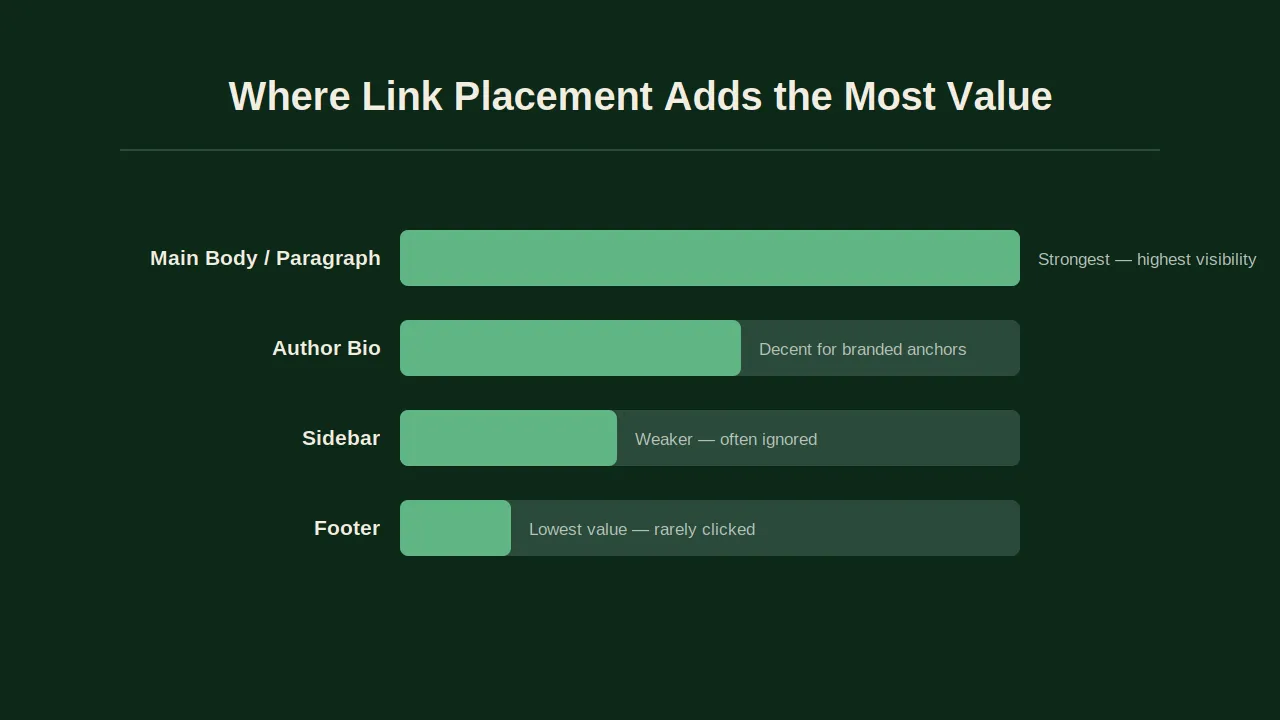
Placement location changes the value of a link:
Risk Checklist — What to Avoid
Before approving any placement, check for link risk. Avoid spammy link placement, any sign of a toxic backlink profile on the host site, and a messy link footprint building up across low-quality pages.
How to Pitch a SERP Insight Guest Post
Pitching well saves hours of wasted back-and-forth. Good outreach and pitching starts with drafting insertion copy that respects the publisher's time, then follows through with steady link building outreach until you get a real answer.
The Pitch Structure That Gets Replies
Keep the outreach email short and specific. Treat this as more than a numbers game in outreach, since a tailored pitch beats a mass blast every time. Focus on negotiating placement clearly, and always speak directly with the website owner or their editorial contact, not a generic inbox.
What Google Actually Says About Paid vs. Editorial Links
Google Search Essentials and its search quality guidelines lay out clear rules here. Google Search itself, along with every Google algorithm update since, keeps pushing the same message: links should help readers first, not just move rankings.
What Google Warns Against With Guest-Post Links
Google warns directly against link schemes and unnatural links built purely for ranking manipulation. Manipulative link schemes can trigger link scheme penalties, a pattern going back to the original Google Penguin update. If you're asking, "is link insertion against Google's guidelines," the honest answer is: only when it's manipulative, spammy, or hidden from readers. Editorial, disclosed, relevant links stay within the rules.
People-First Content Signals Editors and Algorithms Reward
Strong E-E-A-T and genuine content quality signal to both editors and algorithms that a page deserves its ranking. Google rewards pages built for people first, links second.
Editorial Links vs. Paid Link Placements
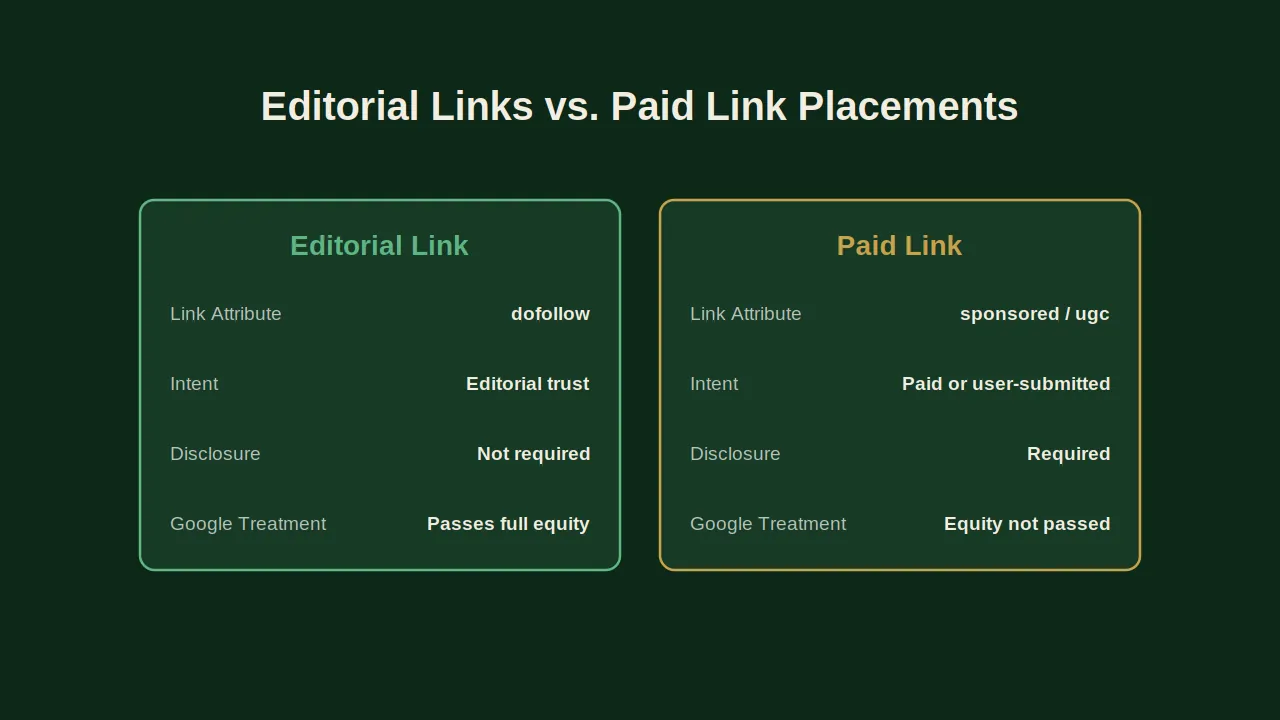
An editorial link differs from a paid placement mainly in disclosure and intent. Paid link disclosure matters here. Google recommends the sponsored link attribute or UGC attribute for transactional link setups, since a transactional link building deal isn't the same as pure editorial trust. Use the rel attribute correctly: rel="sponsored" attribute or rel="sponsored" tag for paid links, and rel="ugc" tag for user-submitted ones. The dofollow attribute passes more weight than the nofollow attribute, so choose carefully. Some sites sell do-follow backlinks or sponsored backlinks outright, but disclosing sponsored links properly protects both sides. Knowing how to disclose a paid or sponsored link keeps your whole campaign compliant.
The SEO Benefits of SERP Insight Link Insertion
Done right, this method delivers real link equity, stronger link juice flow, and better PageRank distribution across your target pages.
Faster Ranking Movement
Placements on active pages move SERP position and keyword ranking faster than links buried on dead pages, since search engine ranking systems weight live, trafficked pages more heavily, lifting organic search rankings sooner.
Higher Contextual Relevance
Links placed inside topically matched content carry stronger contextual relevance, topical relevance, and semantic relevance signals than random placements on unrelated pages.
Better ROI on Link Building Efforts
SEO ROI improves when you skip wasted placements. Tracking link building ROI closely shows the real ROI of link building compared to scattershot outreach.
Reduced Risk of Spam or Penalties
Careful vetting keeps your spam score low and avoids toxic backlinks entirely. This lowers your risk of an algorithmic penalty, a manual action, or a straight Google penalty, while keeping your organic backlinks clean.
Scalability for Competitive Niches
This method supports scalable link building even in tough markets, making it realistic when scaling link building for agencies managing multiple client accounts at once.
Does SERP Insight Link Insertion Help You Get Cited in AI Overviews?
Yes, it can help. Pages with strong topical signals show up more often in AI Overview citations. This connects directly to generative engine optimization, since gaining AI Overview citations depends on the same trust signals Google and tools like ChatGPT pull from. Better AI search visibility and voice search visibility often follow, along with a stronger click-through rate over time.
How SERP Insight Guest Posts Support Link Insertion Strategy
Guest posts and link insertion work best together, not apart. Guest posts work well for supplementing a guest posting strategy already built around link insertion, forming one layered growth strategy instead of two disconnected efforts.
How Guest Posts Fill Keyword and Content Gaps
Guest posts handle content gap analysis findings directly, filling topical authority gaps that link insertion alone can't fix. Building out a full topical cluster this way supports ongoing content cluster monitoring too.
How Guest Posts Strengthen Link Insertion Efforts
New guest posts help with diversifying a backlink profile, keeping your natural link profile varied. This steady backlink building work supports every link insertion placement running alongside it.
When to Combine Both in One Campaign
Combine both when you want a layered growth strategy built for sustainable link building, not just a short-term ranking spike.
How to Find High-Quality SERP Insight Link Insertion Opportunities
Finding good opportunities takes real link prospecting, not luck. Prospecting link opportunities properly answers two common questions at once: how to find link insertion opportunities, and how to vet link insertion opportunities, before you spend a dollar.
How Many SERP Insight Link Insertions Do You Need to Rank?
There's no single fixed number. Link velocity and your overall layered growth strategy both shape the right count for your specific page.
Start With Keyword Difficulty
Higher keyword difficulty usually needs more links. Ranking for competitive keywords takes noticeably more effort than ranking for long-tail keywords, which sometimes need just one or two strong placements.
Focus on Page Authority and Relevance
Page authority matters more than raw link count. A handful of links with strong topical relevance and contextual relevance often outperforms a dozen weak, unrelated placements.
Layer Your Strategy
Use a layered growth strategy that mixes tiered link building with steady link insertion. This answers how to scale a link insertion campaign without overloading one single page too fast.
How Many SERP Insight Guest Posts to Publish Per Month
Most sites benefit from a steady, modest pace as part of a broader content marketing strategy, rather than a rushed burst followed by months of silence.
What SERP Insight Link Insertion Costs in 2026
Link insertion cost varies widely by niche and site quality. Compare this to standard niche edit pricing, and you'll notice price per link insertion depends heavily on pricing tier and site authority. If you're asking how much does link insertion cost, expect a real range, not one flat number.
Premium Editorial Placements
Premium spots sit on a high authority website offering high DR backlinks. These come from sources building expert brand links, known as editorial backlinks, backed by strong publisher reputation.
Budget Link Placements
Budget options rely on transparent pricing and sometimes bulk link packages, letting smaller sites scale without a massive spend upfront.
Are SERP Insight Link Insertions Cheaper Than Guest Posts?
A fair cost comparison of link building tactics shows link insertion pricing usually beats guest post production costs, since you skip writing an entire new article. Many buy link insertions specifically for this savings.
Cost Per Link in India vs. US Markets
Country/geo targeting affects pricing heavily. Each pricing tier shifts based on local publisher rates, market demand, and average traffic value in that region.
5 Questions to Vet Any SERP Insight Link Insertion Vendor
Choosing the right link vendor protects your budget. Whether you work with a link building service provider, a full link building agency, or a smaller link insertion agency, ask these before paying. This applies whether you're comparing the best link insertion services, the best link insertion providers, general link building services, or figuring out how to negotiate link insertion pricing.
Marketplace vs. Manual Outreach vs. In-House: A Comparison
Marketplaces often include an escrow payment platform for escrow-protected purchase process safety, alongside subscription-based link services or pay-per-link pricing. Most give you an order dashboard, reporting dashboard, and wallet/account balance after a free sign-up, making filtering marketplace inventory, browsing available inventory, checking out an order, and reordering placements simple. So, should I hire an agency or DIY link insertion? It depends on your time, budget, and how much control you want over each placement.
How to Measure Results From SERP Insight Link Insertion
Good SEO reporting depends on consistent campaign performance measurement. Track your link building KPIs regularly and run a backlink checker on every live placement.
How Long Does It Take to See Results?
There's no instant fix here. A realistic results timeline answers how long does link insertion take to show results honestly, factoring in normal indexing delay.
The Risks of SERP Insight Link Insertion and How to Avoid Them
Every method carries some link risk. Manipulative link schemes cause real damage, so it's fair to ask: do link insertions get penalized by Google? Only when done carelessly.
Is SERP Insight Link Insertion Safe for Long-Term SEO?
Yes, when done with care. This fits white hat link building and safe link building standards. If you're asking is link insertion safe, the answer depends on link building compliance, since is buying links safe really comes down to how transparent and relevant each placement stays.
When SERP Insight Link Insertion Is the Right Move
It fits well when you want sustainable link building focused on long-term SEO value, not a quick, risky spike.
When This Strategy May Not Be the Right Choice
Weigh quick wins vs sustainable growth carefully. A gradual vs aggressive link building pace should match your site's age and current trust level.
Does SERP Insight SEO Work for Brand-New Websites?
It works better for an established website or aged domain, since new sites often lack the trust needed to benefit fully from this method right away.
Who Should Use SERP Insight Guest Posting and Link Insertion?
This approach fits a wide range of businesses and teams. SaaS companies benefit from focused SaaS link building, while e-commerce brands rely on ecommerce link building, especially when building links for e-commerce category pages. Affiliate marketers, freelance SEOs, SEO agencies, and boutique SEO agencies all use this method to scale results for clients. In-house SEO teams and digital PR agencies both find value here too. Publishers, editors, and journalists often sit on the receiving end of these pitches, while startups use it to build authority fast. News sites and industry publications also fit naturally into this ecosystem, alongside niche blogs looking for extra revenue. Most placements happen on WordPress and other WordPress websites, though e-commerce platforms and SaaS company blogs work too. Industry publication websites and general news websites round out the list of common hosts for these placements.
Where SERP Insight Fits Into a Broader Link Building Strategy
SERP Insight link insertion works as one piece of a full link building strategy, not the whole plan. Comprehensive off-page SEO needs support from multiple digital marketing channels working together.
How Link Building Impacts Other SEO Channels
Strong link building builds brand authority over time and improves organic search visibility. Search engine ranking factors shift often, so staying flexible through Google algorithm updates matters.
Build the Foundation Before Scaling Links
Solid on-page SEO, clean internal linking, and thoughtful external linking should come first. Content quality on your own site supports every link pointing to it.
Digital PR and Expert Outreach as Complements
Digital PR and HARO both complement link insertion well. Digital PR agencies running PR link building campaigns often land mentions link insertion alone can't reach.
Local SEO and Citations
Local SEO link building depends on local citations and steady citation building. Building links for local SEO supports your Google Business Profile (GMB) ranking and helps with local pack rankings too.
Common Mistakes to Avoid With SERP Insight Link Insertion
Many campaigns fail from small, avoidable errors. An unresponsive publisher can stall progress fast, leading to stalled negotiation and delayed publishing. Missing a missed turnaround time (TAT) throws off your whole turnaround time (TAT) schedule. Watch for inflated or fake DR/DA metrics from vendors, and demand real numbers instead. A lack of reporting transparency often hides sudden ranking drops until it's too late to fix. Poor planning also leads to wasted link building budget, so careful link building budget allocation from the start saves real money later.
The Exact 90-Day Playbook We Run for Clients
Every successful link building campaign follows a clear structure. Whether you work with an outside SEO consultant or run everything through an internal SEO agency, this same three-phase process applies.
Phase 1 — Opportunity Vetting (Proprietary Checklist)
This phase runs our full five-stage vetting process. We use an opportunity assessment checklist for vetting publishers, backed by a self-scoring vetting checklist for every candidate page.
Phase 2 — Strategic Outreach and Value Crafting
Next comes outreach and pitching, negotiating placement, and drafting insertion copy. We finish by submitting an insertion request, following a clear system for how to do outreach for link insertions.
Phase 3 — Integration and Measurement
The final phase covers editorial review and approval, followed by publishing the content update. We finish with monitoring link status and verifying indexation to confirm everything holds.
SERP Insight link insertion, paired with smart guest posting, gives you a repeatable system instead of a guessing game. Follow the stages, vet every page, and track your results honestly, and your link building efforts will hold up long after the trends move on.
Frequently Asked Questions
What is SERP Insight Link Insertion?
SERP Insight Link Insertion means placing your backlink inside content that already ranks on Google, not random blog posts. I check the page's SERP position first, then confirm it earns real traffic. Once that's clear, I add a contextual link inside existing, relevant text. This gives you a working, ranking page instead of a hopeful new post. It's faster than guest posting and safer than random niche edits, since you know the page already performs before your link goes anywhere near it.
What is the difference between SERP Insight Link Insertion and a guest post?
Link insertion uses content that already exists and already ranks. Guest posting means writing a brand-new article and pitching it to a publisher from scratch. I use link insertion when I need speed, since there's no writing or editing delay involved. Guest posts give me full control over structure, tone, and topic depth. Both build backlinks, but insertion moves faster while guest posts build deeper topical authority over time. I usually run both together for balanced results.
Is SERP Insight Link Insertion different from a niche edit?
Yes, and it's an important distinction. A regular niche edit just needs a decent domain, without checking if the page ranks for anything useful. SERP Insight Link Insertion only targets pages already ranking for your exact target keyword. So every SERP Insight placement is technically a niche edit, but not every niche edit meets my SERP Insight standard. I skip pages with no ranking history, even if their domain metrics look strong on paper.
Is SERP Insight Link Insertion safe, or does it violate Google's guidelines?
It's safe when done the right way. Google's guidelines target manipulative link schemes, not relevant, editorial placements that genuinely help readers. I only add links where they clarify or support the existing content naturally. I avoid forced placements, thin pages, and anything that reads like an ad. As long as the link fits the context and serves the reader, it stays well within white hat, safe link building practices.
How long does SERP Insight Link Insertion take to show results?
Most of my clients see early movement within four to eight weeks, though it depends on crawl frequency and keyword difficulty. Google needs time to discover the link, index the update, and reassess the page's ranking signals. Competitive keywords take longer than long-tail ones. On-page SEO on your own site also affects the timeline. I always tell people this is a boost, not a switch you flip for instant rankings.
How do I find high-quality SERP Insight link insertion opportunities?
I start with SERP-based keyword research, checking which pages already rank for my target term. Then I run competitor backlink analysis to see where similar sites already earn links. Next, I check page authority, organic traffic, and content freshness before reaching out. I always confirm the page has editorial relevance, meaning my link would actually clarify something for the reader. Spam score and toxicity checks come last, filtering out risky, low-quality pages entirely.
How many link insertions should I do per keyword?
There's no fixed number that works for every keyword. I start by checking keyword difficulty, since competitive terms usually need more placements than long-tail ones. Page authority and topical relevance matter more than raw count here. I layer my strategy, adding a few strong links, then watching ranking movement before adding more. Rushing too many insertions at once raises link velocity red flags, so I always pace things out naturally.
Can I do SERP Insight link insertion myself instead of hiring an agency?
Yes, you can, if you're willing to put in the research time. You'll need to learn SERP analysis, page vetting, and outreach negotiation on your own. DIY works fine for smaller campaigns or single-site projects. An agency saves time through existing publisher relationships and faster turnaround. I'd say start DIY if you're testing the waters, then consider outside help once you're ready to scale across multiple keywords or sites.
Can bad backlinks hurt my site?
Yes, definitely. A toxic backlink profile or links from spammy, low-quality pages can trigger a manual action or algorithmic penalty from Google. I always check spam score and host page quality before accepting any placement. Over-optimized anchor text makes things worse, since it looks unnatural to Google's systems. If you ever spot harmful links pointing at your site, the disavow tool helps remove their negative impact.
Does SERP Insight SEO work for brand-new websites?
It works better once your site has some age and trust behind it. Brand-new websites often lack the authority needed to fully benefit from strong link placements right away. I usually recommend building a few guest posts and on-page fundamentals first. Once your site has an established presence, SERP Insight link insertion starts delivering faster, more noticeable ranking movement across your target keywords.
Does SERP Insight link insertion help with AI Overviews or ChatGPT citations?
It can help, yes. Pages with strong topical signals and clear authority show up more often in AI Overview citations. This connects to answer engine optimization, since tools like ChatGPT pull from trusted, well-linked sources. I've noticed pages with solid SERP Insight placements tend to gain better AI search visibility over time. It's not guaranteed, but it clearly improves your odds of getting cited.
What anchor text should I use in guest posts and link insertions?
I mix it up every time, never repeating the same anchor twice in a row. Branded anchors work well for author bios, while partial match anchors fit naturally inside body content. Generic anchors like "this guide" add variety without looking forced. I avoid exact match anchors most of the time, since overusing them triggers an over-optimized anchor text penalty. Natural variety always protects your backlink profile long-term.
How do you measure SERP Insight guest posting ROI?
I track keyword ranking movement first, since that's the clearest early signal. Organic traffic growth on the linked page comes next, checked through sessions and clicks data. I also watch referring traffic to confirm real readers are clicking through, not just bots. Link equity transfer and ranking stability round out my full picture. If rankings and traffic both improve steadily, the campaign is doing its job.
Is guest posting risky for SEO in 2026?
Not if you follow Google's actual guidelines around paid versus editorial links. The risk comes from manipulative link schemes, forced placements, and undisclosed sponsored content. I focus on people-first content, strong E-E-A-T signals, and proper anchor text diversity. Guest posts written this way build real topical authority instead of triggering penalties. The risky part isn't guest posting itself, it's doing it carelessly without any editorial standards.
Need a Technical SEO Audit or Strategy Call?
Connect directly with Ibrahim SEO on WhatsApp to review your site speed, topical structure, and organic growth plan.